

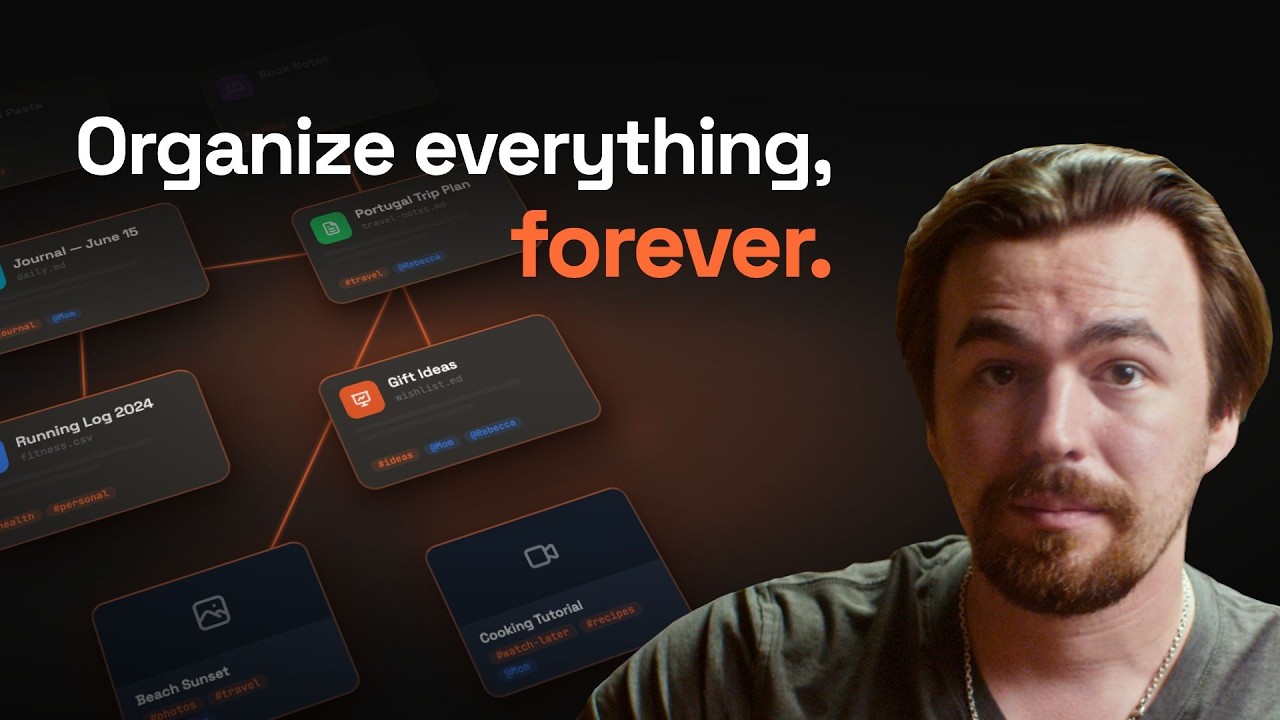
Interesting tool based on blocks to tag any document for photos you own. With app to allow access from any device. Blocks contains tags and links between them to organize all like a heap.
I haven’t installed the self-hosted version yet to see how it can interact with an existing Obsidian vault. Next step.
Site: https://heaper.de/
Postgres? Sorry. If it needs a database, it’s probably not for me. Can’t be asked to keep another database backed up.
almost every self hosted service needs a database. and what “another” database? are you keeping separate postgreses for each service that wants to use it? one of the most important features of postgres is that it as a single database server can hold multiple databases, with permissions and whatnot
Most selfhosting services employ a database in their own docker (separate) container.
oh, I see what you mean!
they do that for the sake of providing an example that works instantly. but on the long term it’s not a good idea. if you intend to keep using a service, you are better off connecting it to a postgres db that’s shared across all services. once you get used to it, you’ll do that even for those services that you are just quicly trying out.
how I do this is I have a separate docker compose that runs a postgres and a mariadb. and these are attached to such a docker network, which is created once with a command, rather than in a compose file. every compose file where the databases are needed, this network is specified as an “external” network. this way containers across separate compose files can communicate.
my advice is its best to also have this network as “internal” too, which is a weird name but gist is, this network in itself won’t provide access to your LAN or the internet, while other networks may still do that if you want.
basically setup is a simple command like “docker network create something something”, and then like 3 lines in each compose file. you would also need to transfer the data from the separate postgreses to a central one, but thats a one time process.
let me know if you are interested, and I’ll help with commands and what you need. I don’t mind it either if you only get around to this months later, it’s fine! just reply or send a message
That’s a nice offer. But I’m using nixos containers to top it all off. I’m sure it’s possible to have a master-db on the core os and the containers access the central db… but I have hardly any time to do the stuff, I’m reasonably competent in as it is. Managing nixos containers and learning how to coneect the databases for using postgres in the intended way… idk. 😅
From previous interactions in this community, it seems all but obvious nowadays, when peoples’ experience with sysadmin in average amounts to running scripts running docker in some form.
just to be clear, are you saying that most beginners just copy paste the example docker compose from the project documentation, and leave it that way?
I guess that’s understandable. we should have more starter resources that explain things like this. how would they know, not everyone goes in with curiosity to look up how certain components are supposed to be ran
Essentially, yes: nowadays you can go much further without basic understanding of what’s going on. The ability to fire up magic black boxes that are somewhat functional without any configuration or understanding required is liberating at first, so it’s perfectly understandable. I don’t think it’s a panacea, though.
What is your struggle with db backups? Databasus makes it so trivial for me personally.
The fact that I have to use a more complicated tool than
cd.But how does changing the current directory backup your files???
Sorry, meant
cp.