

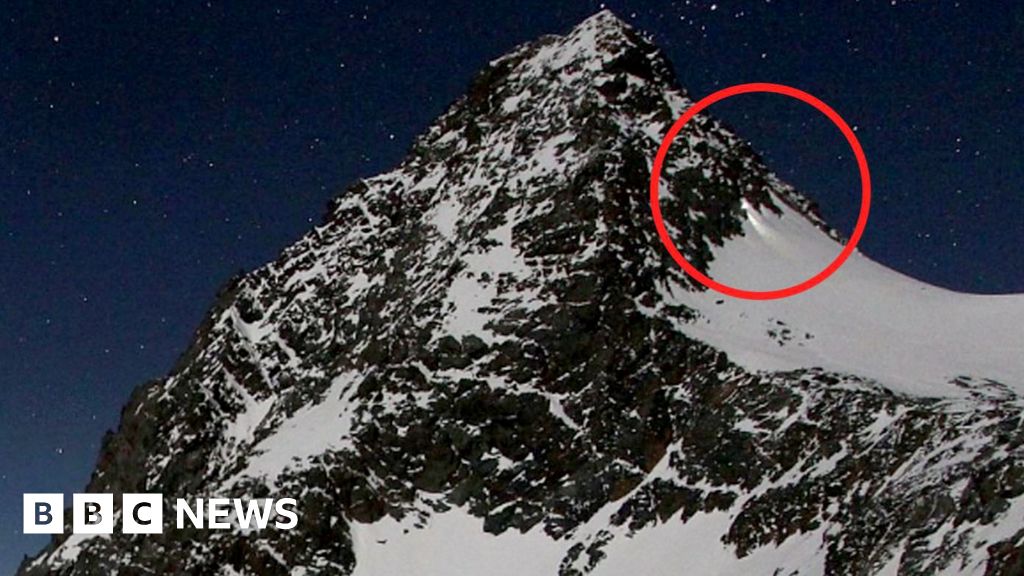
More than a year after a 33-year-old woman froze to death on Austria’s highest mountain, her boyfriend goes on trial on Thursday accused of gross negligent manslaughter.
Kerstin G died of hypothermia on a mountain climbing trip to the Grossglockner that went horribly wrong. Her boyfriend is accused of leaving her unprotected and exhausted close to the summit in stormy conditions in the early hours of 19 January 2025, while he went to get help.
The trial has sparked interest and debate, not just in Austria but in mountain climbing communities far beyond its borders.
Arctic mountains… unexplored deep caves… diving into oceanic trenches… I feel like if you do any of these things, you are solely responsible if you get hurt or die, and that people do these things because they are so dangerous.
Either she was an experienced climber and made the decision to enter a dangerous, life-threatening situation, or she wasn’t, and he dragged her into it. It seems like everyone is saying she’s the former except these prosecutors who are looking to paint her as a victim, when she had the skill and experience to make that decision, and chose poorly.
Her footwear selection (light snowboarding boots) might indicate she’s on the wrong side of the knowledge curve. Dunning Krueger is a bitch sometimes. But I read elsewhere that her family is standing by him, and I assume there’s a reason for that.
I think it really depends how dangerous it would have been for him to stay with her.
On Everest, if someone is incapacitated, then there’s no point waiting with them because then you’d die too and no rescue is coming.
This situation is different because a rescue could be mounted, and its not certain the guy would’ve died if he had have waited with her.
Like imagine you’re swimming a few hundred metres from the beach and your partner gets a cramp, do you just say “oh well you knew the risks” and leave them?
Only if you planned to breakup before, it avoid the uncomfortable situation for both person once you announced it and swim away 👍
If they can’t be helped without putting yourself at risk of drowning too, then yes. For instance, if someone is panicking and thrashing around, posing a threat to rescue, then they yes, you leave them to die or risk dying as well. This is an uncomfortable reality of being in dangerous situations.
Yeah one of the things you learn in lifeguard class is that it’s a wrestling match against the person you’re trying to rescue if they aren’t compliant (many aren’t and you can’t assume they will be).
Sure, but you’re taking me out of context.
The comment I replied to is basically saying that if it’s a risky endeavor then if things go wrong you just say “oh well you knew the risks” and leave.
As an aside, I’m Australian, I have a surf life-saving accreditation (very common here), I’m well aware of the dangers of a water rescue.
My point is, it’s not a question of whether the person in need of rescue knew the risks, rather a question of the risks to the rescuer. As I said in my comment it’s not clear what the risks to the guy really were. It does seem that, had the couple been appropriately provisioned, the risks to him would’ve been minimal.
A friend told me his lifeguard course contained a self defense portion, to avoid being dragged underwater by someone panicking. I can’t say the same about my mountaineering experience.
This one was in central Europe, though.
he left her there, his intention of getting rid of her one way or another. on the same post on reddit, people mentioned how he couldve bundled her up, or hid in a place with shelter but he just dumped in her in the middle of the cold and left. he also turned off his phone at some point too.